Don't Miss the Moment
🔍 When Knowing Turns into Drift
Most estates issues don’t arrive suddenly. They build slowly:
• Small defects left “for now”
• Systems running inefficiently for months
• Maintenance postponed because the window “isn’t quite right”
• Energy waste that becomes normalised
Individually, these delays feel harmless.
Collectively, they create drift — a gradual slide into higher cost, higher risk, and lower control.
Drift is the silent killer of estates performance.
🎯 Timing Is a Strategic Lever
Funding matters.
But timing determines the outcome.
There are moments in the school year when action is:
• Cheaper
• Easier
• Less disruptive
• More likely to succeed
Yet these windows are often missed because decision‑making doesn’t align with operational reality.
The result?
Schools end up paying more for work that could have been done earlier, faster, and with far less impact on staff and pupils.
📅 The Windows Schools Consistently Miss
Every school has predictable opportunities to act:
• Holiday periods — the most underused operational window
• Budget cycles — where early planning avoids last‑minute panic
• Leadership transitions — when estates priorities can be reset
• Energy price shifts — where proactive adjustments save thousands
When these windows pass, the cost of action rises — sometimes dramatically.
⚡ Energy Waste: The Most Visible Symptom
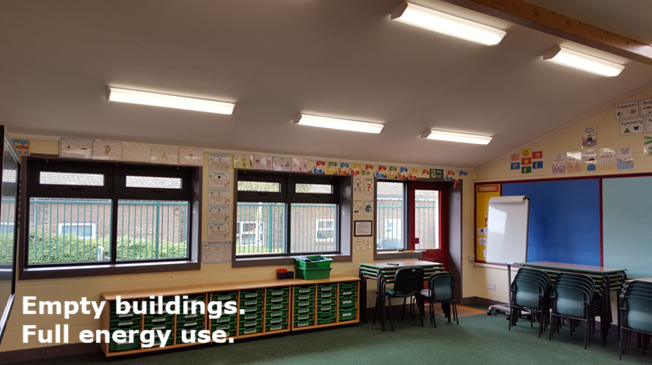
One of the clearest examples of timing failure is energy use during low occupancy.
Many schools still run heating, ventilation and lighting as if the building is full, even when:
• Only a small part of the school is in use
• Staff numbers are reduced
• Pupils are off‑site
• Large areas could be zoned or shut down
This isn’t a technical limitation.
It’s a management and timing issue.
The opportunity to reduce cost is there — but the moment to act is often missed.
🔧 Active Management Beats Maintenance
High‑performing estates teams don’t simply maintain buildings.
They manage performance.
They:
• Monitor continuously
• Adjust systems proactively
• Use data to guide decisions
• Act early, not react late
This mindset shift — from maintenance to performance — is what separates schools that stay in control from those that drift into crisis.
🏫 Leadership Determines Outcomes
Estates performance is a reflection of organisational behaviour.
Where leadership provides:
• Clear ownership
• Timely decisions
• Consistent oversight
• Support for early action
…schools stay ahead of risk.
Where leadership delays, defers or deprioritises estates, the consequences show up months or years later — often at far greater cost.
📈 The Business Case Gap
Projects rarely fail because the need is unclear.
They fail because the business case focuses on condition, not consequence.
Effective cases:
• Quantify the cost of inaction
• Highlight the timing window
• Show the operational impact
• Present clear, time‑bound options
When timing is part of the case, decisions accelerate.
❓ The Real Question
The issue isn’t the Real Question
The issue isn’t:
“What needs doing?”
Schools already know that.
The real question is:
“When must we act?”
Because in estates, timing is the difference between:
• Control and crisis
• Efficiency and waste
• Planned work and emergency work
• Predictable cost and spiralling cost
🏁 Final Thought
In estates management:
What you do matters.
When you do it determines the outcome.
⏳ Don’t miss the moment.